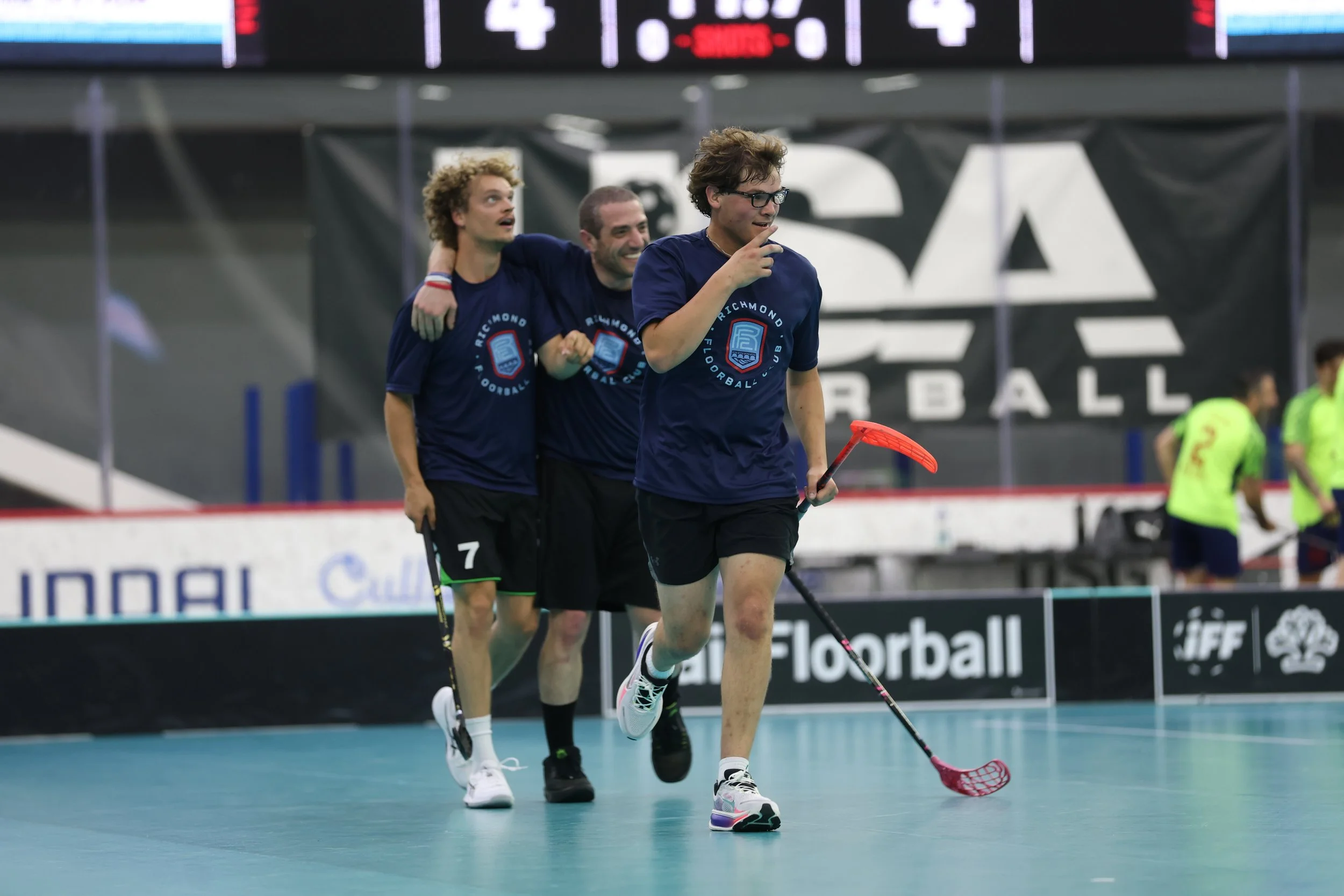
The community continues to come out and support; so we will too..
Richmond Floorball Club began with a simple idea: adults would try a new sport if the experience felt clear, low‑pressure, and genuinely welcoming. Everything that followed grew from that starting point.
Why RFC exists
Floorball has always been easy to learn, affordable, and fast enough to feel exciting right away. What held it back in Richmond wasn’t the sport—it was the experience around it. Adults trying something new don’t need perfection. They need clarity, space, and a room that doesn’t make them feel like they’re interrupting something.
RFC formed around that gap. Lower the friction. Explain the basics. Offer equipment. Make the environment readable. If people felt welcome before they felt skilled, they would return.
What RFC is built on
Lower the barrier
Free play. Free sticks. Clear expectations. We remove friction so people can actually try the sport.
Protect the beginner moment
The first experience determines everything. If it feels open, people return. If it feels closed, they don’t.
Self‑reinforcing culture
People who were helped become helpers. That cycle is the foundation of the club.
Ambition without gatekeeping
We welcome beginners and compete seriously. Those two things strengthen each other.
What happened next
Over the first year, more than five hundred registrations came through RFC, representing just under two hundred individuals. The important part wasn’t the number—it was the pattern. People didn’t just try it once. They returned, learned the game, and stayed long enough for something stable to form.
Some of those beginners kept progressing. They trained more seriously, joined competitive groups, and moved into national‑level play. This year, RFC is sending two teams to USA Floorball Nationals.
500+ registrations across ~200 individuals
Beginners who stayed became returners, helpers, and competitors
Local and national partners supporting growth and visibility
How we operate
RFC is a Virginia nonstock corporation, sanctioned by USA Floorball. We keep our structure simple and our communication clear.
-
Structure: Volunteer‑powered, community‑focused, with a formal board developing as we grow.
-
Decisions: We ask three questions: Does it serve the community? Do we have the resources? Can we execute it well?
-
Fees: Some programs require fees to cover real costs. Funds go back into the club.
-
Safety: All participants follow our Code of Conduct. Safety is foundational.
-
Communication: The website is the source of truth. Email is official. Social media is supplemental.
RFC will continue evolving. When processes or structures change, we update this page and communicate clearly.
Why Richmond made sense
Richmond has always been a place where unusual but genuine things can take root. The city doesn’t require a sport to be mainstream—it requires it to feel real and accessible. Floorball fits that pattern naturally.
The region already had the largest concentration of recreational floorball players in the country. What RFC did was make that activity visible, structured, and welcoming enough for new people to enter without hesitation.
Where
This sport has grown here because it reflects what makes Richmond special: openness, movement, and a strong sense of community. Whether you’re competitive, brand new, a former athlete, or just curious—we welcome everyone.
We aim to create a space where elite players and beginners support one another, where coaching and mentorship happen naturally, and where anyone can find their place—whether playing, coaching, or organizing.
Why Floorball?
Why RFC exists
Floorball is fast, affordable, low-barrier, and one of the easiest ways for people to experience hockey-style play without needing to skate or buy expensive gear.
But access only works when the culture around the game is held the right way. A new player’s first night should not feel confusing, hidden, unfair, or closed off. RFC was built to make that first step clearer and better.
We want beginners to have a real chance to learn, experienced players to have a serious place to compete, and the game itself to grow without losing the spirit that makes it worth protecting.
Why Floorball. Why Richmond. Why RFC.
Richmond Floorball Club exists because floorball is a strong sport that wasn’t being delivered through the right kind of experience. The game has always been fast, inexpensive, and easy to learn, but the environment around it didn’t always match that accessibility. For adults trying something new, the first night matters more than people admit. If it feels confusing or closed off, they don’t return. If it feels clear and low‑pressure, they do.
RFC started from that simple observation. Lower the friction. Explain things plainly. Offer equipment. Make the room feel open instead of coded. If people were welcomed before they were skilled, some would stay long enough to become skilled. Over the past year, that proved true. More than five hundred registrations came through RFC, representing just under two hundred individuals. The notable part wasn’t the volume—it was the retention.
What formed wasn’t only a beginner space. It became a mixed environment where new players, experienced players, and competitive athletes could coexist without one group overwhelming the others. Some of the people who entered as beginners kept progressing and moved into national‑level play. This year, RFC is sending two teams to USA Floorball Nationals.
The assumption in many sports is that being welcoming lowers competitive standards. RFC’s experience has been the opposite. A culture that teaches and makes room doesn’t dilute ambition—it broadens the base that ambition grows from. As the playing culture stabilized, partnerships formed and the club became easier to recognize from the outside. None of that came from marketing tricks. It came from consistency and from the fact that newcomers weren’t treated as interruptions.
Richmond is a natural fit for this. The city has a long history of supporting activities that are slightly off‑center but genuine. Floorball fits that pattern. It doesn’t need to be mainstream to work here; it just needs to feel real and accessible.
Looking ahead, RFC will move toward a more formal nonprofit structure—officers, directors, and the systems required to support growth without burning out the people doing the work. That step matters, but it only works if the structure reflects the culture that built the club in the first place. Without that, it becomes just another organization with a familiar set of problems.
What has made RFC function so far is straightforward: people consistently choosing to explain the game, answer questions, hand someone a stick, and remember what it felt like to be new. Anyone who has played, volunteered, partnered, or supported the club has already shaped it. The next phase is simply a more deliberate continuation of the same work—keeping the door recognizable as the club grows around it.
The value of RFC has never been that people arrived already confident. It’s that they could arrive uncertain and leave thinking they might belong.